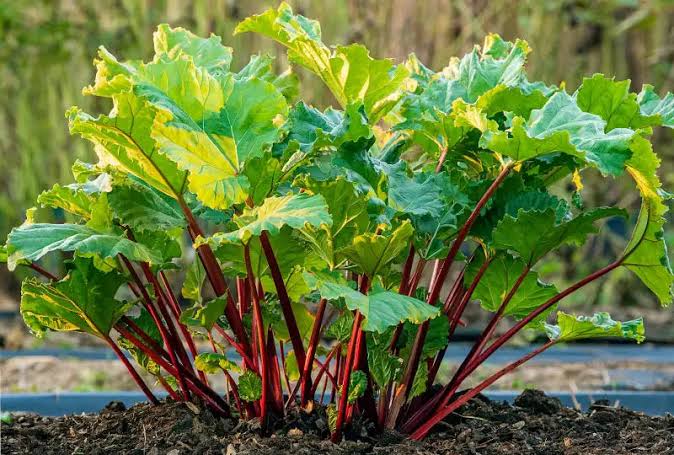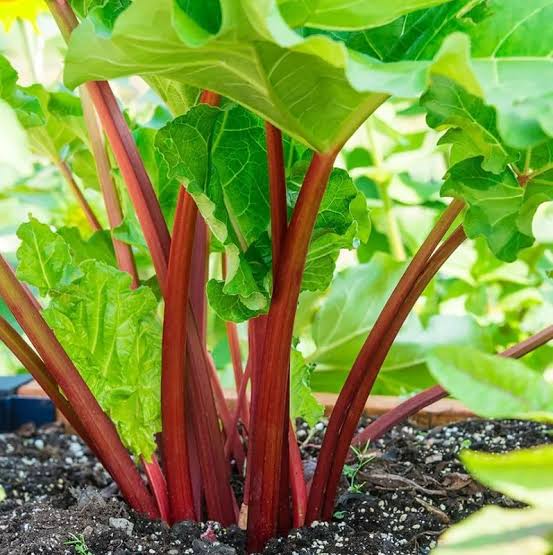
Rhubarb is a perennial plant. It will return back every spring. The plant gets new stalks from its deep root system every spring, returning to produce harvests for many years in the garden.
Rhubarb is most commonly used in culinary applications for its tart, fleshy stalks, which are harvested and cooked into a variety of sweet dishes. It is very acidic and it is rarely eaten raw and is almost always paired with sugar or sweet fruits.
GROWING Rhubarb From Seeds
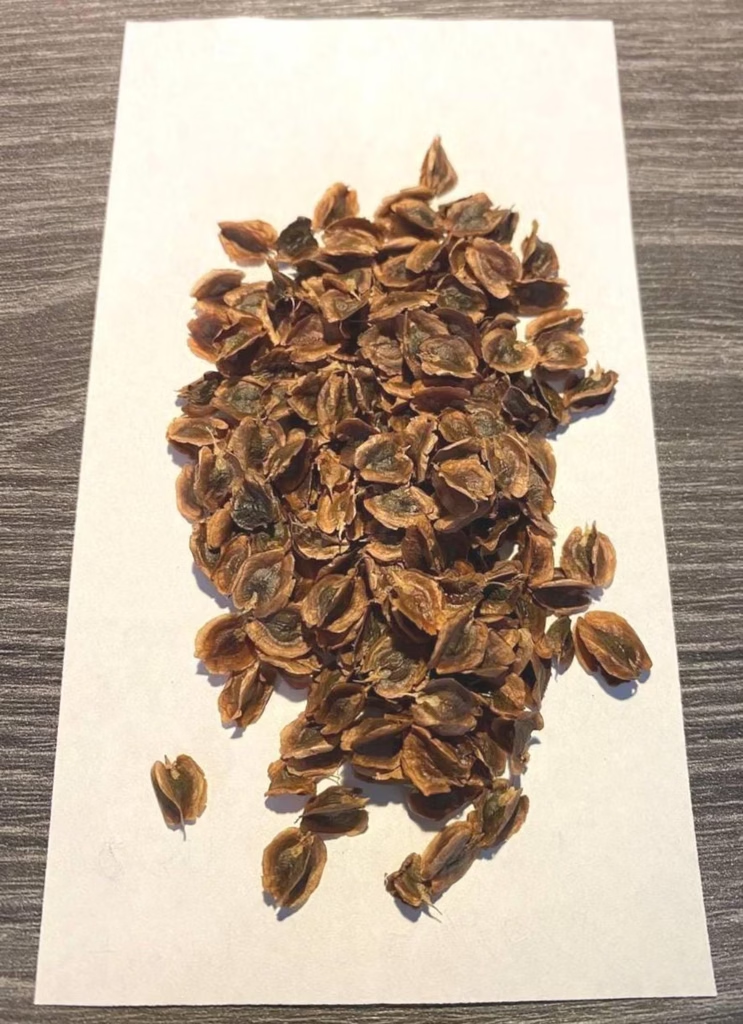
Growing rhubarb from seeds is very easy. Start seeds indoors about six to eight weeks before the last spring frost. Sow the seeds roughly half an inch deep, in shallow seed trays filled with moist, well-draining potting mix. keep the soil consistently warm and damp until germination occurs within one to two weeks, and gradually harden off the seedlings outdoors once all danger of frost has passed. It grows well in zone 7B.
Transplant Plants into the Garden
Transplant them into a sunny location. It needs 6 hours of daily sun light. Use rich, organic, and well-draining soil, with a layer of compost. Spacing the plants about three to four feet apart to give their large foliage plenty of room to thrive. While it can be tempting to harvest early, remember not to pick any stalks during the first year so the plant can direct its energy into building a strong, deep root system for abundant harvests in the years to follow. Keep it moist all the time, too much water will rot the roots. A mature rhubarb plant typically grows to 4 feet tall and 4 feet wide.
Harvesting
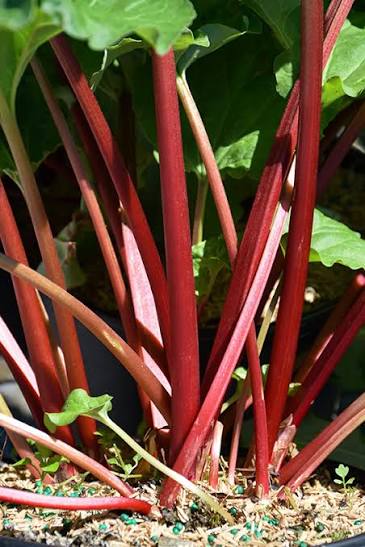
On the third year, pick the stalks when they are crisp, firm, and roughly 10 to 18 inches long. firmly grasp the base of the stalk, pull down, and gently twist it away from the crown.
Growing Rhubarb From Seeds In Containers
A single mature rhubarb plant needs a large container 20-gallon pot (roughly 18 to 24 inches wide and deep), or a half-wine barrel. The container must have excellent drainage holes. Use a rich, fertile, and well-draining potting mix blended with compost or well-rotted manure. in nutrient-dense soil with a slightly acidic to neutral pH (6.0 to 6.8). Use 1 seed in the container. Keep it in a sunny area. It needs 6 hours of sun daily. Water it often. It needs to be moist all the time. It will grow well. Enjoy it.
Feed your container plant monthly during the spring and summer with a balanced organic vegetable fertilizer or top-dress the soil with fresh compost.